

Usually at night, some people feel disturbing stiffness; for instance, the hand goes numb somewhere around 3 AM, and the person wakes up shaking it out, waiting for the sensation to return. In the morning, the fingers feel thick and clumsy for the first 20 minutes, and simple daily tasks start to seem like a misery; the coffee cup gets dropped, the wrist aches after an hour at the keyboard. Most often, people tend to ignore these signs,s as they might think it’s happening just because they slept in the wrong position for some time.
By the time most patients describe this pattern to a doctor, they have been living with it for months. And the question almost all of them ask is the same: do I need surgery?
For a significant proportion of people with carpal tunnel syndrome, the answer is no. But only if the right treatment is started early enough and directed at the right problem.
What Carpal Tunnel Syndrome Actually Is?
The carpal tunnel is a fairly narrow channel on the palm side of the wrist, formed by the wrist bones on three sides and a firm ligament across the top. A median nerve runs through this carpal tunnel, along with nine flexor tendons that control finger movement.
If the tunnel becomes tighter and gets compressed, whether through inflammation, swelling, repetitive mechanical stress, or anatomical changes, the median nerve comes under pressure. That pressure is what produces the characteristic symptoms of carpal tunnel syndrome treatment: numbness and tingling in the thumb, index, middle and part of the ring finger, hand weakness, difficulty gripping, and symptoms that are reliably worse at night or first thing in the morning.
What complicates diagnosis is that not all wrist pain and hand numbness originates in the carpal tunnel. The median nerve travels all the way from the cervical spine through the shoulder, elbow and forearm before reaching the wrist. Nerve compression at any point along that path can simulate the symptoms of carpal tunnel syndrome. Missing this distinction is one of the main reasons treatment sometimes fails.
Carpal Tunnel Syndrome: Who Should Be Aware Of It
Carpal tunnel syndrome is no longer primarily an industrial or manufacturing condition. In our clinical experience at Healthspace Clinic, a growing proportion of patients are desk workers, developers, graphic designers, writers and others who spend long hours with their wrists in sustained or repetitive positions.
Sustained wrist flexion, as when typing with the wrists dropped below the keyboard, or prolonged wrist extension during mouse use, narrows the carpal tunnel and increases pressure on the median nerve over time. Add poor workstation ergonomics, inadequate rest breaks and already tight forearm muscles, and the conditions for CTS develop gradually without any single triggering event.
Other contributing factors include pregnancy, hypothyroidism, diabetes, rheumatoid arthritis and previous wrist fractures. In these cases, carpal tunnel syndrome treatment must account for the underlying systemic condition alongside the local mechanical problem.
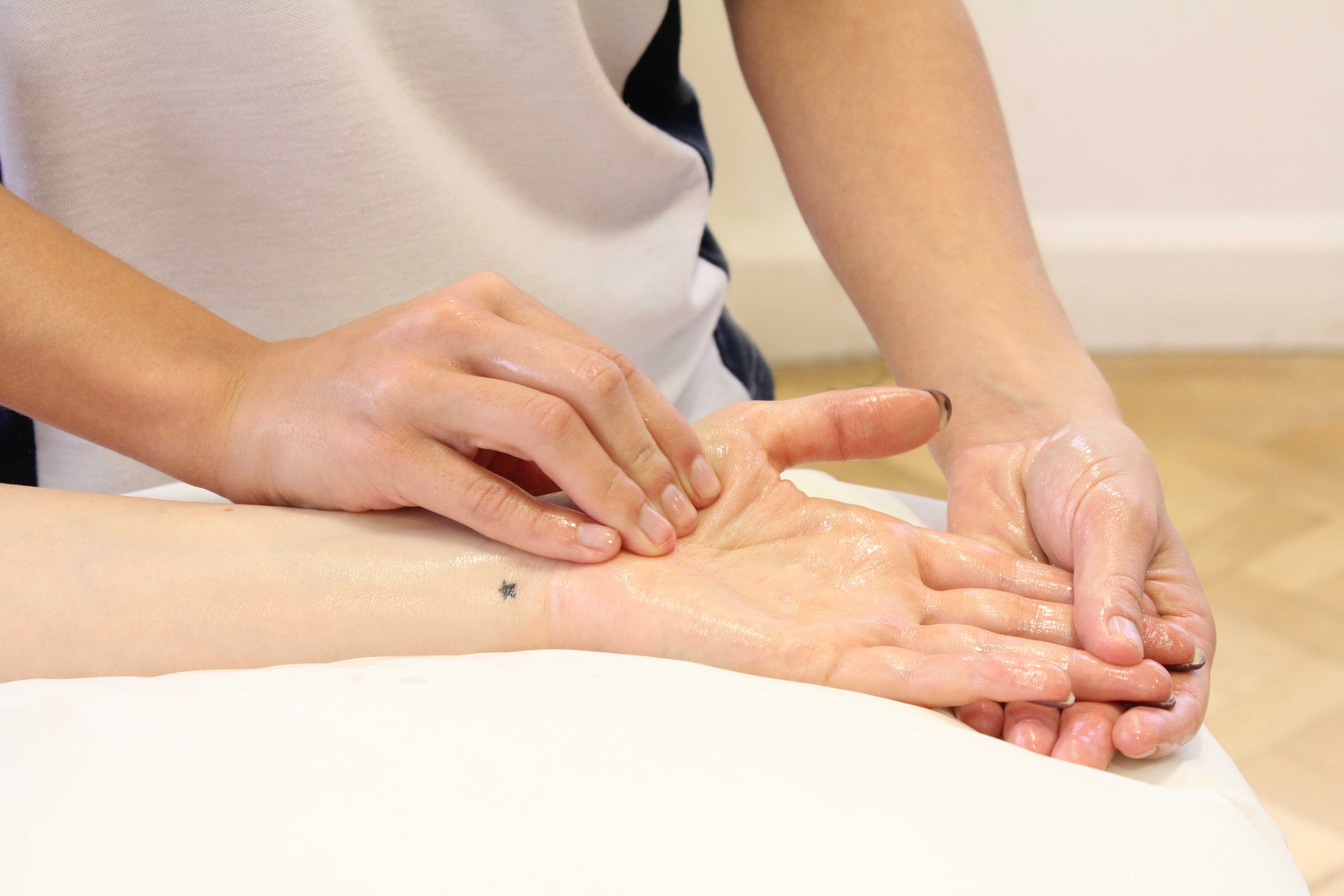
How Does Physiotherapy for Carpal Tunnel Syndrome Work?
Physiotherapy for carpal tunnel syndrome addresses the condition from multiple directions simultaneously. Rather than targeting just the wrist, a well-designed treatment plan looks at the nerve, the surrounding soft tissue, the posture and the movements that are perpetuating the problem.
Night Splinting
One of the most effective first-line interventions for mild to moderate CTS is a neutral wrist splint worn at night. Most people unknowingly flex or curl their wrists while sleeping, which increases carpal tunnel pressure for hours at a time. A splint that controls the wrist in a neutral position reduces that sustained compression and allows the median nerve to recover during sleep.
Patients who follow this consistently often notice measurable improvement in night symptoms within two to three weeks. It does not fix the underlying cause, but it significantly reduces cumulative nerve stress while other interventions are introduced.
Nerve and Tendon Gliding Exercises
Median nerve gliding exercises are specific movements designed to restore the nerve’s ability to slide freely through the carpal tunnel and along its entire path from the neck to the fingertips. When a nerve loses mobility through chronic compression or inflammation, it becomes tethered and irritable. Gliding exercises restore that movement gradually.
Tendon gliding exercises complement this by reducing adhesion between the flexor tendons in the tunnel, which in turn reduces friction and pressure on the median nerve itself.
These exercises must be introduced carefully and at the right stage of recovery. Done too aggressively in an inflamed nerve, they can increase irritation rather than reduce it.
Manual Therapy and Soft Tissue Work
In clinical practice, many CTS patients have concurrent tightness through the forearm flexors, restrictions at the wrist joint, and postural changes in the shoulder and neck that collectively increase tension on the median nerve. Manual therapy directed at the forearm, wrist, elbow and cervical spine can meaningfully reduce the mechanical load on the nerve even before exercises begin.
This is where the notion of “double crush syndrome” becomes relevant. When the median nerve is compressed at two points simultaneously, such as the cervical spine and the wrist, symptoms are often more severe than either compression alone would produce. Treating only the wrist in these cases leads to partial improvement at best.
Ergonomic and Postural Correction
Effective wrist pain treatment for CTS cannot stop at the clinic. If the positions and movements that created the problem are not modified, symptoms will return regardless of how well the in-clinic treatment goes.
A physiotherapy programme should include a thorough assessment of how the patient works and moves. Keyboard height, mouse position, screen placement, wrist angle during repetitive tasks, and frequency of rest breaks all influence how much daily mechanical stress the median nerve is absorbing. Correcting these factors is not optional for lasting recovery.

When Physiotherapy Is Not Enough
Being honest about this matters.
Physiotherapy for carpal tunnel syndrome is most effective in mild to moderate cases, where symptoms are intermittent, sensation returns quickly after shaking the hand, and grip strength has not significantly deteriorated.
In severe CTS, where numbness is constant rather than episodic, where the muscles at the base of the thumb have visibly wasted, or where nerve conduction studies show significant median nerve damage, surgical decompression is likely to be necessary. Physiotherapy in these cases still has a role, but it sits before and after surgery rather than as an alternative to it.
The important principle is that deciding between conservative management and surgical referral should be based on a proper clinical and neurological assessment, not on how long the patient has been waiting or how much the wrist hurts. Duration of symptoms alone does not determine severity.
At Healthspace Clinic: Finding the Source, Not Just the Symptom
At Healthspace Clinic, patients presenting with hand numbness, tingling, or wrist pain receive a structured clinical assessment before any treatment is prescribed. This includes evaluation of the cervical spine, shoulder, elbow, forearm and wrist to identify all points of neural tension, not just the carpal tunnel. Dr Rupa Mehta and the physiotherapy team bring over 35 years of clinical experience to musculoskeletal and nerve-related conditions. Treatment approaches include manual therapy, nerve and tendon mobilisation, splinting guidance, exercise rehabilitation and ergonomic assessment, combined where appropriate with modalities.
If you are a physiotherapist in South Mumbai or a patient seeking assessment for suspected carpal tunnel syndrome, the earlier an accurate diagnosis is made, the wider the range of conservative options available.

