

You’ve been dealing with a nagging ache for weeks now — somewhere around your hip, maybe radiating down your leg. You Google it, and suddenly you’re caught between two possible explanations: hip pain or sciatica. Both sound plausible. Both involve the lower body. And the internet, true to form, manages to make you equally convinced it could be either one.
Here’s the thing — they’re not the same condition, they don’t originate from the same place, and more importantly, they don’t respond to the same treatment. Getting this wrong isn’t just frustrating; it can mean months of treating the wrong problem while the real one quietly gets worse.
Let’s break it down properly.
They Can Feel Remarkably Similar — That’s the Problem
Both hip pain and sciatica can cause discomfort in the outer hip, buttock, and thigh. Both can flare up when you sit for long periods, walk, or climb stairs. And both are incredibly common in people who lead desk-heavy lives, have spent years ignoring postural imbalances, or are in their 40s and beyond.
What most people don’t realise is that the two conditions have very different origins — and that distinction is what should drive your treatment plan.
What Is Hip Pain, Really?
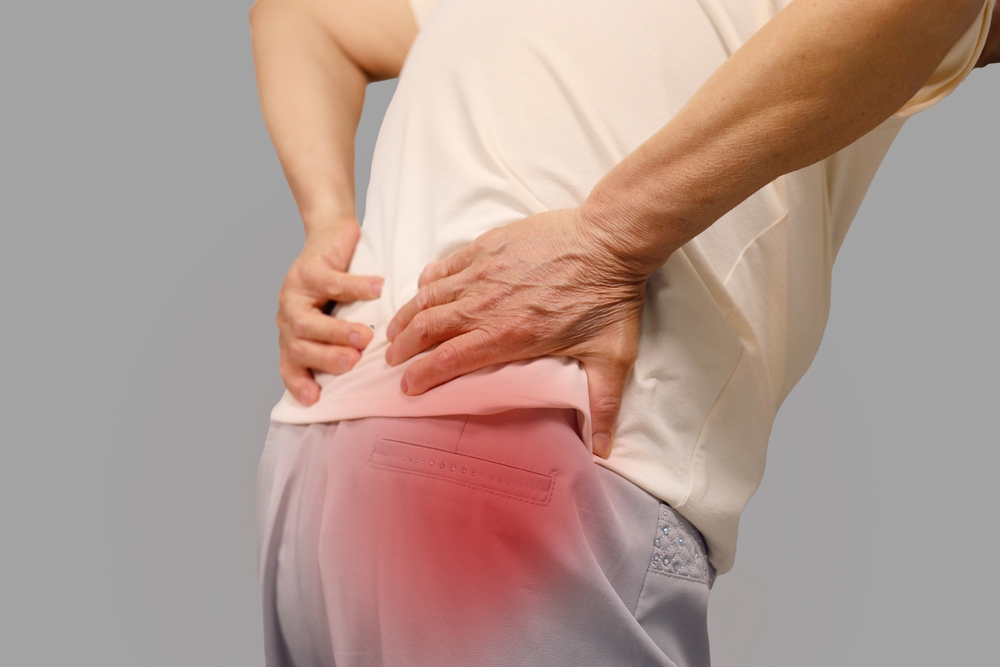
True hip pain originates from the hip joint itself — a ball-and-socket joint where the femur meets the pelvis. When something goes wrong here — whether it’s osteoarthritis, bursitis (inflammation of the fluid-filled sacs cushioning the joint), labral tears, or muscle tightness in the hip flexors and glutes — the pain tends to be localised.
Signs that point toward hip joint pain:
- Discomfort felt deep in the groin or the front of the hip
- Stiffness first thing in the morning that eases with movement
- Pain that worsens when you rotate your leg inward, cross your legs, or get in and out of a car
- A grinding or clicking sensation in the joint
- Pain that stays in the hip/groin region without travelling down the leg
One pattern we often see in our patients at Healthspace Clinic is hip pain that crept in gradually — no dramatic injury, no single moment of “it happened here.” It was just tighter mornings, then mild discomfort during walks, then something that started interfering with daily life.
What Is Sciatica — and Why Is It Frequently Misidentified?
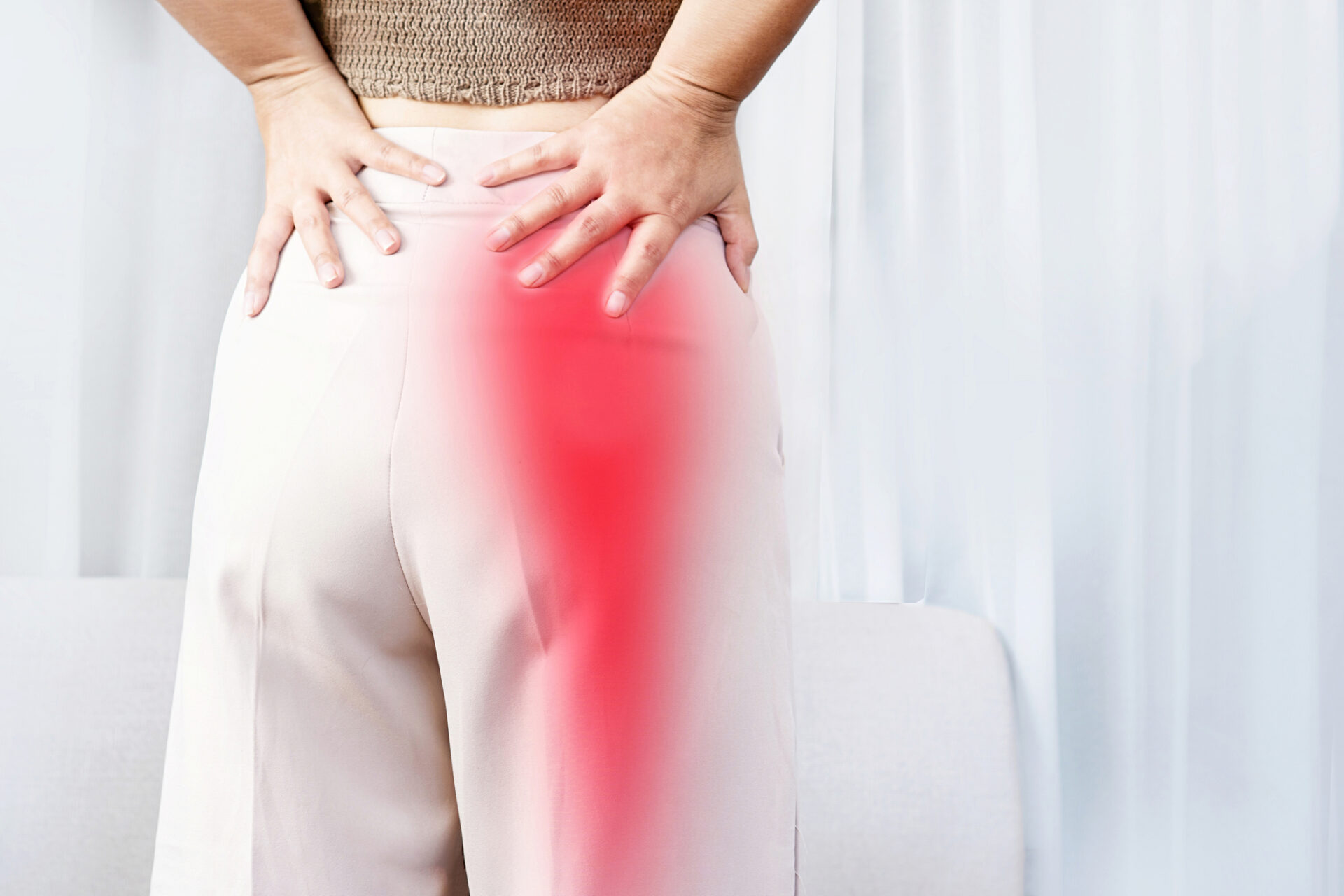
Sciatica isn’t a diagnosis in itself; it’s a symptom. It describes irritation or compression of the sciatic nerve — the longest nerve in the body, running from the lower spine through the buttock and all the way down to the foot.
The most common cause is a herniated or bulging disc in the lumbar spine (usually L4-L5 or L5-S1), but it can also be triggered by piriformis syndrome, spinal stenosis, or even tight muscles pressing on the nerve.
Signs that point toward sciatica:
- Pain that starts in the lower back or buttock and travels down one leg — sometimes all the way to the calf or foot
- A sharp, burning, or electric-shock quality to the pain
- Numbness, tingling, or a pins-and-needles sensation anywhere along the leg
- Weakness in the affected leg
- Pain that worsens when you sneeze, cough, or sit for extended periods — and sometimes improves when you walk
Here’s where things get interesting: sciatica can absolutely cause hip area pain. The nerve passes right through that region. So patients come in convinced they have a hip problem, when what they actually have is a lumbar nerve issue that’s referring pain into the hip and leg.
This is exactly why a proper clinical assessment — not a Google search — is the first step.
The Overlap Zone: When It’s Both (or Neither)
In our experience, a significant number of patients have a combined presentation. Years of a sedentary lifestyle, poor posture, or uncorrected movement patterns can result in both lumbar tightness and hip dysfunction at the same time.
There’s also a condition called piriformis syndrome — where the piriformis muscle in the buttock tightens and irritates the sciatic nerve — that perfectly mimics sciatica but originates in the hip musculature. It’s common, it’s frequently missed, and it responds beautifully to targeted physiotherapy for hip pain.
The point is: these conditions overlap in uncomfortable ways. The diagnostic process matters enormously.
How a Physiotherapist Tells the Difference
A skilled physiotherapist doesn’t rely on symptoms alone. Through a combination of postural assessment, movement screening, neurological testing, and hands-on evaluation, they can generally distinguish between hip joint pathology, nerve compression, and muscular dysfunction within the first session.
At Healthspace Clinic, our assessment for these presentations typically involves:
- Orthopaedic tests — such as the FABER and FADIR tests to stress the hip joint, and the straight leg raise test to implicate the sciatic nerve
- Neurological screening — checking reflexes, sensation, and muscle strength along the relevant nerve pathways
- Movement analysis — watching how you walk, bend, and bear weight to identify compensatory patterns
- Palpation — hands-on assessment of muscle tension, joint mobility, and trigger points
What this achieves is a clear picture of what’s actually driving your symptoms — and that picture directly informs the treatment plan.
What Physiotherapy in Mumbai Can Do for Both Conditions
This is where the distinction between hip pain and sciatica starts to matter practically.
For hip pain, physiotherapy typically focuses on:
- Restoring joint mobility through manual therapy and mobilisation techniques
- Strengthening the hip abductors, glutes, and core muscles that support the joint
- Releasing tight hip flexors and iliotibial (IT) band through targeted stretching and soft tissue work
- Correcting gait and movement patterns that are loading the joint abnormally
For sciatica, physiotherapy focuses on:
- Relieving nerve irritation through specific directional exercises (the McKenzie Method, for example, is highly effective here)
- Decompressing the affected spinal segments through manual therapy
- Neurodynamic mobilisation — gentle techniques that improve the ability of the sciatic nerve to move freely through surrounding tissues
- Core strengthening to reduce load on the lumbar discs and protect the nerve over the long term
Both require patience and consistency — but both respond very well to structured physiotherapy when caught reasonably early.
When to Stop Waiting and See Someone
Pain that has been present for more than two to three weeks without improvement, numbness or tingling that extends below the knee, or any weakness in the leg are all reasons to stop self-managing and get a proper assessment. Similarly, if you’re taking painkillers regularly just to get through the day, that’s the pain being masked — not treated.
The best physiotherapy for hip pain doesn’t start with a scan or a prescription. It starts with understanding what’s actually happening in your body and creating a plan specific to you.
The Healthspace Approach
At Healthspace Clinic in South Mumbai, we understand that pain in the hip and lower body rarely fits neatly into one box. Our approach — led by Dr. Rupa Mehta, with over 35 years of experience in physiotherapy — combines advanced manual therapy techniques like the McKenzie Method, Mulligan Method, Neurodynamic Solutions, and dry needling with a thorough understanding of how your daily life, posture, and movement habits contribute to what’s hurting.
We don’t just treat the area that aches. We look at the whole picture — your spine, your hip, your movement patterns, and your daily environment — to understand where the problem is actually coming from.
If you’ve been going back and forth between “is this my hip or my back?” for longer than feels reasonable, it might be time to stop guessing.
Book a consultation with our physiotherapy team in South Mumbai — and get clarity on what’s actually going on, and what to do about it.

